Plans & Monthly Cost · Guide
Which carrier does a game camera use? Why your phone carrier is the wrong question
People search for a US Cellular game camera plan, a Verizon plan or an AT&T plan because that is how phones work. Trail cameras do not work that way. The camera brand sells you the data, the camera picks the network, and your own phone bill has nothing to do with it.
By Mike M.Updated Spec-checked · every figure sourced
#adReader-supported: we may earn a commission if you buy through our links, at no extra cost to you. It never decides a ranking. How we rank · Disclosure
The answer, plainly
If you are on US Cellular and you want a game camera, buy whichever camera suits your set and buy that brand's plan. You will not find a US Cellular trail camera plan because US Cellular does not sell one, and you do not need one. The same is true of Verizon and AT&T: there is no consumer trail camera data plan sold by a phone carrier in the way a tablet line or a hotspot line is.
The confusion is understandable, because retailers do tag cameras by carrier. Trailcampro, for example, maintains separate Verizon-tagged and AT&T-tagged collections of cellular cameras, and both pages exist specifically to address the misconception. Those tags describe which network the camera's own SIM connects to, not which phone company bills you.
Is there a US Cellular game camera plan?
No camera in our registry ships a US Cellular SIM, and no maker we checked publishes a US Cellular option. Every published network specification we have on file names AT&T and Verizon, or describes automatic selection across the major networks without naming them. Moultrie states all four major networks with Auto Connect on the Edge line. Spypoint specifies a dual SIM that connects automatically to the strongest signal. Browning pre-installs both an AT&T and a Verizon SIM and lets you choose between the two. Bushnell's CelluCORE uses a dual SIM across AT&T and Verizon. Wildgame's Encounter XT lists Verizon and AT&T coverage.
So the practical answer for a US Cellular customer is the same as for everyone else: pick the camera on its merits, pick the brand's plan tier, and verify that at least one major network reaches the location. If you live in an area where US Cellular is the only strong signal and the majors are weak, that is a coverage problem to solve with a multi-carrier camera and an antenna, not a plan to go looking for. The ranking of multi-carrier cameras for weak signal is in best cellular trail camera for low signal.
Who actually sells you the data
| Camera brand | Who bills you | Entry tier | Billed |
|---|---|---|---|
| Spypoint | Spypoint | Free, 100 photos/mo | Per camera |
| Stealth Cam (and Muddy) | Stealth Cam Command | $5/mo, 600 photos | Per camera, descending on unlimited |
| Tactacam Reveal | Tactacam | $5/mo ($55/yr), 250 photos | Per camera; Live View is a separate add-on |
| Moultrie Mobile | Moultrie | $8.99/mo, 1,000 images | Per camera, no free tier |
| Wildgame Innovations | HuntSmart | $6/mo, or $5/mo billed annually, 250 photos | Per camera, no free tier |
| Browning | Strike Force Wireless | Prices behind an account login; not verifiable | Month to month |
Every row in that table is a relationship with the camera company, not a carrier. That is why switching your phone to a different network changes nothing about your cameras, and why a family plan cannot absorb them. The tier-by-tier comparison, with the multi-camera math, is in cellular trail camera plans compared.
What the cameras publish about networks
There are three designs in the market and the difference matters on a marginal set.
Multi-carrier auto-connect. The camera evaluates the available networks at power-on and picks the strongest. Moultrie publishes this across the Edge line and Spypoint publishes a dual SIM that connects automatically to the strongest signal. On ground where one network is patchy, this is the design you want, because the camera solves the problem for you.
Dual SIM, user chooses. Browning ships both an AT&T and a Verizon SIM in its Defender bodies and you select the network. That is more work and more control: if you know from experience which network holds up on your ground, you can set it and be done.
Single network. Older and cheaper cameras are sometimes sold in carrier-specific variants, which is where the retailer tagging comes from. Avoid buying a single-network camera for a set you have not tested, because there is no way to fix a wrong choice afterwards.
How to check coverage at the set, properly
Carrier coverage maps are the starting point, not the answer. Verizon and AT&T both publish interactive maps, and they are honest about broad coverage while being useless about a specific creek bottom: terrain, canopy and distance from the tower change the picture at a scale no map resolves.
Cameras and hardware for a marginal set
Our picks for this
Three multi-network cameras and the antenna that rescues them
If signal is the constraint, buy a camera that can choose its network and budget for an antenna. Both are cheaper than discovering the problem after the season starts.
Best cheap multi-carrier camera
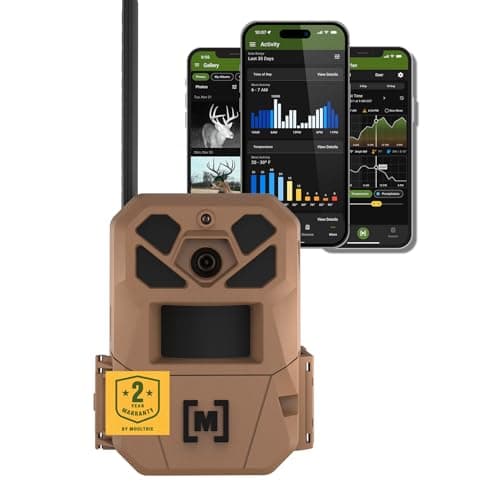
Moultrie Edge 3
Moultrie Mobile6.4/10Moultrie states Auto Connect across all four major networks, with built-in memory and no SD card. The cheapest way into a camera that chooses its own carrier.
$66.49Amazon#ad · Price as of October 11, 2026 · Disclosure for the link to Moultrie Edge 3
Best value cellular camera
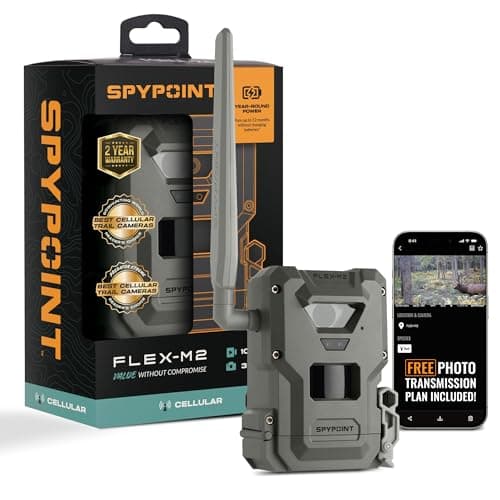
Spypoint Flex-M2
Spypoint7.5/10A dual SIM that connects automatically to the strongest signal, plus a free 100-photo plan tier so a marginal set costs nothing to test.
$59.99Amazon#ad · Price as of October 11, 2026 · Disclosure for the link to Spypoint Flex-M2
Best trigger speed cellular camera
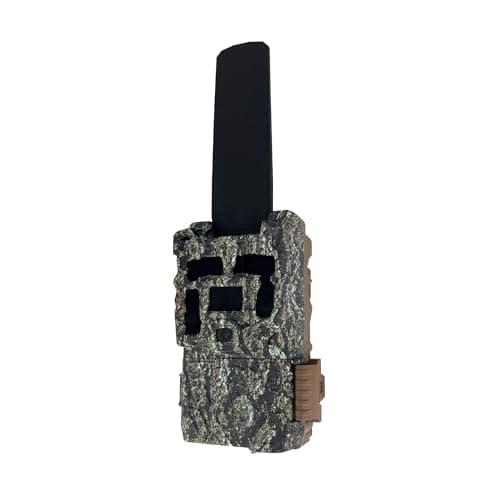
Browning Defender Pro Scout Max HD DV
Browning (Strike Force Wireless)7.8/10Pre-installed AT&T and Verizon SIMs with a manual choice between them, and Browning states it also runs as a plain SD camera if the signal defeats you.
$164.90Amazon#ad · Price as of October 11, 2026 · Disclosure for the link to Browning Defender Pro Scout Max HD DV
Best cellular booster antenna
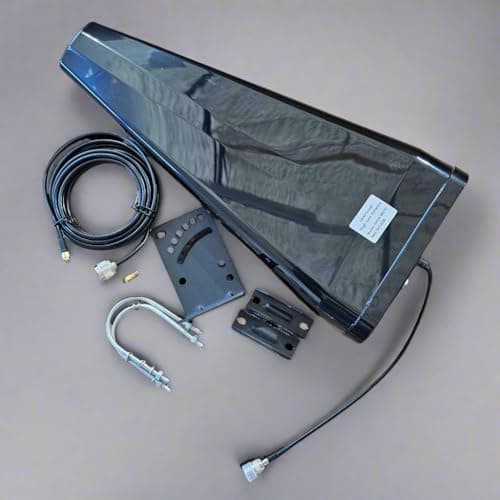
Herd360 Universal Directional High-Gain Booster Antenna
Accessory8.2/10A universal directional high-gain booster antenna. On a one-bar set this is usually the difference between photos and nothing.
$64.95Amazon#ad · Price as of October 11, 2026 · Disclosure for the link to Herd360 Universal Directional High-Gain Booster Antenna
What to do with one bar, or none
Work in this order. First raise the camera and clear the line toward the nearest tower — height is free and often sufficient. Second fit an external antenna if the camera has a port; a directional high-gain unit aimed at the tower is the single most effective fix available, and the options are compared in best cellular trail camera antennas. Third accept a reduced upload size and a slower schedule, which lets a weak link complete a transmission instead of timing out.
If none of that works, the set does not support a cellular camera and no plan will change that. Put a card camera there instead — the best of them outperform cellular cameras on night image and runtime anyway, and the ranking is in best non-cellular trail cameras. For a camera that has signal and still is not sending, the diagnosis sequence is in cellular trail camera not sending pictures.
One thing not to do: buy a carrier-tagged camera on the assumption that matching it to your phone carrier will help. It will not. The camera's SIM and your phone's SIM are unrelated accounts on unrelated bills.
How we scored this
The research behind these picks
Every pick here is built from documented evidence: the maker's published trigger speed, flash type, battery configuration and detection range; each brand's plan tiers verified on its own plan page and turned into the real monthly cost at one and four cameras; the independent shootouts (Trailcampro, Outdoor Life, Field & Stream, TechGearLab) cited by name for the measurements they published; and a public rubric applied the same way to every model. Every figure links to where it came from, so you can check our work in one click.
Scores are editorial judgments from that documented research. Commissions never set a score or decide a pick. The rubric and its weights are published.
Questions
Frequently asked
Is there a US Cellular game camera plan?
No. No camera we have on file ships a US Cellular SIM, and US Cellular does not sell a trail camera data plan. The camera brand sells the data, so a US Cellular customer buys the same Moultrie, Spypoint, Tactacam or Stealth Cam plan as everyone else.
Does my trail camera have to use the same carrier as my phone?
No, and it usually cannot. The camera carries its own SIM on an account held by the camera brand. Your phone carrier is irrelevant to whether the camera works; what matters is whether any major network reaches the tree.
What carrier do cellular trail cameras use?
AT&T and Verizon are the networks named most often in published specifications. Moultrie states all four major networks with Auto Connect, Spypoint and Bushnell use a dual SIM that selects automatically, and Browning pre-installs both an AT&T and a Verizon SIM for you to choose between.
Should I buy the Verizon or the AT&T version of a trail camera?
Prefer a camera that does not make you choose. If you must, test the actual set with a phone on each network before buying, because a single-network camera cannot be changed afterwards. Retailer carrier tags exist to address exactly this confusion.
Will a trail camera work with no cell service?
A cellular camera will take and store photos but cannot send them. Try more height and an external directional antenna first. If the set genuinely has no service, use a card camera there — the best of them beat cellular cameras on night image and battery life anyway.
Can I put several trail cameras on one data plan?
Generally no: almost every brand bills per camera. Stealth Cam's unlimited tier descends in price for each additional camera on the account, and Spypoint discounts annual billing, but there is no shared pool of data in the way a phone family plan works.
Keep reading
Related on Cam & Canopy
- Best cellular trail cameras for VerizonThe cameras behind the Verizon tag.
- Best cellular trail cameras for AT&TThe cameras behind the AT&T tag.
- Best camera for low signalWhen coverage is the constraint.
- Best cellular trail camera antennasThe cheapest fix for one bar.
- Cellular plans comparedWho bills you, and how much.
- Not sending picturesSignal, SIM and plan, in diagnosis order.
Receipts
Sources
- Moultrie — EDGE 3 product page (checked 2026-09-21)
- Moultrie Mobile — plans page (checked 2026-09-21)
- Spypoint — FLEX-M2 product page (checked 2026-09-21)
- Spypoint — photo transmission plans (checked 2026-09-21)
- Spypoint — support article: how to optimize signal strength (checked 2026-09-26)
- Browning Trail Cameras — Defender Pro Scout Max HD DV product page (checked 2026-09-21)
- Browning Trail Cameras — cell cam plans page (defers to Strike Force Wireless login; checked 2026-09-21)
- Bushnell — CelluCORE 20 Solar product page (checked 2026-09-21)
- Wildgame Innovations — Encounter XT product page (checked 2026-09-28)
- Wildgame Innovations — HuntSmart app and data plan tiers (checked 2026-09-28)
- Stealth Cam — Command data plans page (checked 2026-10-01)
- Tactacam — REVEAL app plans page (checked 2026-09-21)
- Trailcampro — Verizon-tagged cellular cameras, and the carrier-matching misconception (checked 2026-09-26)
- Trailcampro — AT&T-tagged cellular cameras, and the carrier-matching misconception (checked 2026-09-26)
- Verizon — coverage map (checked 2026-09-26)
- AT&T — wireless coverage map (checked 2026-09-26)
- Herd360 — Universal Directional High Gain Booster Antenna product page (checked 2026-09-26)
Every number above is traceable: specs come from the maker's own product pages (linked on every product), plan prices from the maker's plan page with an “as of” date, and independent measurements are attributed to whoever made them. Amazon prices change often, so every buy button takes you to Amazon's current price for that listing. Read the full method.