Trail Cameras · Guide
Trail camera detection range: how far it really picks up a deer, and why the angle matters more
Every maker prints a detection range in feet. Almost none prints the angle, which is what decides whether a deer walking past at 20 feet trips the sensor at all. Here's what the number means, what changes it, and how to set for it.
By Mike M.Updated Spec-checked, not field-tested
#adReader-supported: we may earn a commission if you buy through our links, at no extra cost to you. It never decides a ranking. How we rank · Disclosure
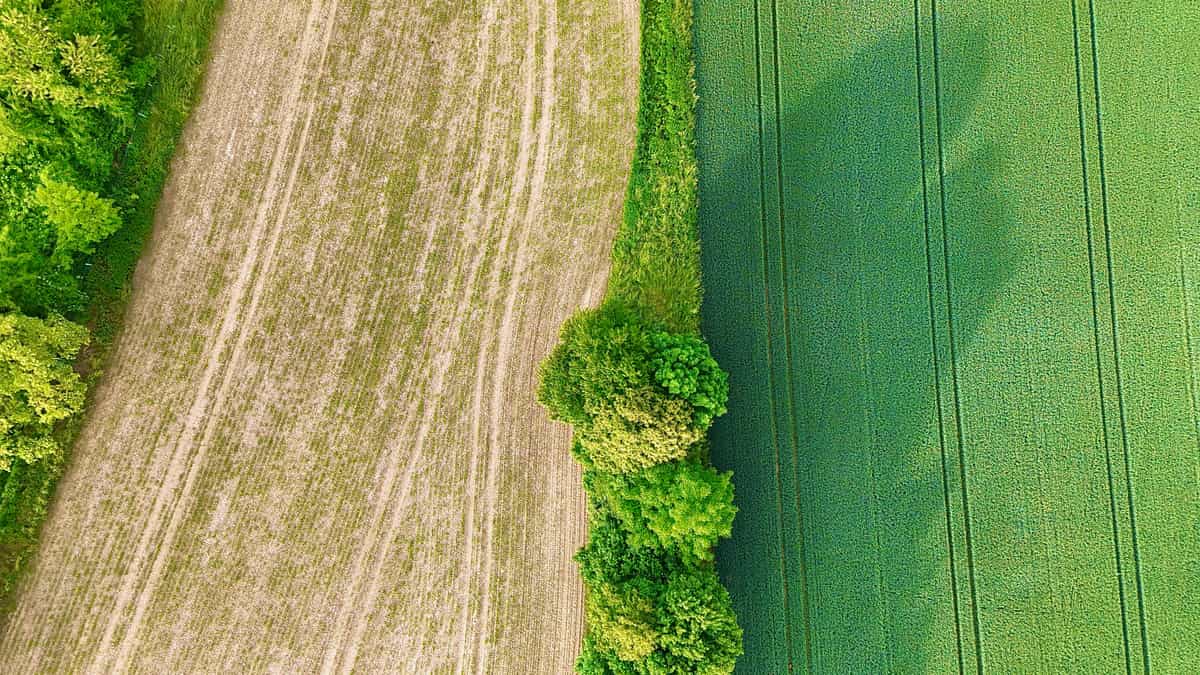
How a PIR sensor detects
A passive infrared sensor doesn't see shapes. It sees a change in infrared heat across segments of its lens. A warm deer moving from one segment to the next produces a difference; enough difference, fast enough, fires the trigger. That has three consequences. Movement across the sensor is detected far better than movement straight toward it. A warm background (a sunlit field in August) shrinks the contrast and the range. And a stationary deer, however close, doesn't trigger anything until it moves.
Detection, flash, field of view: three different cones
- Detection range is the PIR's reach. Moultrie: 100 ft on every Edge. Spypoint: 90 ft (Flex-M2), 100 ft (Flex-Dark). Browning: 100 ft (Strike Force, Defender), "adjustable up to 80 ft" (Spec Ops). Tactacam: "96ft+" (X 3.0), "80ft+" (Pro 3.0).
- Flash range is how far the IR LEDs light a subject at night. Often quoted equal to detection (100 ft / 100 ft), sometimes longer (Browning Strike Force Pro X: 100 ft detection, 120 ft illumination; Bushnell CORE DS-4K: 120 ft night range). A deer detected at 90 ft but lit to 60 ft is a dark photo.
- Field of view is what the lens sees. Moultrie publishes 50° on the Edge line. Trailcampro measured 48.2° on the T5NG. A 50° lens at 20 ft sees about 19 ft of trail.
Why angle beats distance
Picture a camera on a tree, trail 20 feet in front, perpendicular. With a 55° detection angle the sensor covers about 21 feet of trail; a deer at 3 mph crosses that in under five seconds, and the PIR needs it to cross a segment boundary first. With a narrow angle, say 35°, the covered stretch is 13 feet, three seconds. The trigger then fires with the deer already a foot or two into the zone. Now aim the camera 30 to 45° along the trail instead. The deer walks toward the camera through the zone for 30 or 40 feet, the sensor sees it cross segment after segment, and the photo is a deer coming at you rather than a rump leaving. Detectionrange barely changed; the geometry did all the work.
What changes detection range in the field
- Heat. An 85°F afternoon on a sunlit edge can halve effective range; the deer isn't much warmer than the background.
- Cold. The opposite. A deer against frozen ground is a bright target; ranges run long, and so do false triggers on sun-warmed branches.
- Grass and brush. Anything between the deer and the sensor that's the same temperature as the air blocks or diffuses the signal. Trim the lane.
- Rain and fog. Both scatter IR; range drops and night flash reach drops more.
- Sensitivity setting. High sensitivity extends range and multiplies false triggers on windy days. Most cameras default to medium for a reason.
What the makers publish
Range in feet: nearly everyone. Angle: almost no one. GardePro's A60 page claims a "120-degree angle, with 60 degrees in the center and 30 degrees on each side," which is the widest published figure we found and, if it holds up to measurement, a genuine advantage at close range. Trailcampro's measured 55° on the T5NG and 34.9° on the Bushnell CelluCORE 20 Solar are the only independent angles we have. The Moultrie Edge 3 Pro is the only current cellular camera with an independent detection win (Trailcampro 2026).
How to set for it
- Put the trail 20 to 40 feet out, not 80. Rated maximums are for ideal conditions.
- Aim 30 to 45° along the trail, so deer walk into the zone.
- Clear the lane of grass and branches between camera and trail.
- Mount 3 to 4 feet high, level, or slightly higher angled down; see height.
- Drop sensitivity in summer and on windy edges; raise it in winter.
The full set is in trail camera placement; the empty-frame problem is in the placement guide's false-trigger section.
Cameras with published or measured detection figures
Our picks for this
Four cameras where the detection number has something behind it
An independent shootout win, a measured angle, a 100 ft claim with a shootout placing, and the widest claimed angle.
 Stock photo
Best detection cellular camera
Moultrie Edge 3 Pro
Moultrie Mobile8.0/10100 ft published; winner of Trailcampro's 2026 cellular detection shootout.
Check price · Amazon#ad · Price set by Amazon · Disclosure for the link to Moultrie Edge 3 Pro
 Stock photo
Best budget non-cellular camera
GardePro T5NG
SD / Wi-Fi8.5/10Trailcampro-measured 110 ft at a 55° detection angle. Under $90, SD.
Check price · Amazon#ad · Price set by Amazon · Disclosure for the link to GardePro T5NG
- Stock photo
Best no-glow cellular camera
Spypoint Flex-Dark
Spypoint8.4/10100 ft published; Trailcampro's 2026 cellular flash-range winner, so what it detects, it lights.
Check price · Amazon#ad · Price set by Amazon · Disclosure for the link to Spypoint Flex-Dark
- Stock photo
Best budget 4K camera
GardePro A60 4K
SD / Wi-Fi7.8/10Claims a 120° PIR angle, the widest we found; a claim, not a measurement.
Check price · Amazon#ad · Price set by Amazon · Disclosure for the link to GardePro A60 4K
How we scored this
Cameras we claim to have field-tested: none we don't own
Plenty of sites say they hung every camera on this list in a tree for a season. We don't say that, and we say so on every page. What we do instead: read the maker's published trigger speed, flash type, battery configuration and detection range; verify each brand's plan tiers on its own plan page and compute the real monthly cost at one and four cameras; cite the independent shootouts (Trailcampro, Outdoor Life, Field & Stream, TechGearLab) as their measurements, never ours; and score every pick on a public rubric. Every figure links to where it came from.
Scores are editorial judgments from that documented research, not lab results. Commissions never set a score or decide a pick. The rubric and its weights are published.
Questions
Frequently asked
How far will a trail camera pick up?
Makers rate 80 to 120 feet; real detection is shorter, and drops in heat, tall grass and rain. Set the trail 20 to 40 feet out and the rating stops mattering.
What is the range of a trail camera at night?
Detection range is the same day or night; flash range is what limits night photos, usually 80 to 120 feet rated and much less in practice. See best for night pictures.
Which trail camera has the longest detection range?
On published figures, 100 ft is standard (Moultrie, Spypoint Flex-Dark, Browning, Stealth Cam). Trailcampro measured 110 ft on the GardePro T5NG. Angle matters more; GardePro claims 120° on the A60.
Why does my trail camera miss deer that walk right past it?
Usually the camera is perpendicular to the trail with a narrow detection angle, the deer crossed the zone in a second, and the trigger fired late. Aim along the trail at 30 to 45° and move it closer.
Keep reading
Related on Cam & Canopy
Receipts
Sources
- Trailcampro — GardePro T5NG review, measured figures (checked 2026-09-21)
- Trailcampro — Bushnell CelluCORE 20 Solar review, measured figures (checked 2026-09-21)
- GardePro — A60 4K product page (checked 2026-09-21)
- Moultrie — EDGE 3 PRO product page (checked 2026-09-21)
- Moultrie — EDGE 3 product page (checked 2026-09-21)
- Spypoint — FLEX-DARK product page (checked 2026-09-21)
- Spypoint — FLEX-M2 product page (checked 2026-09-21)
- Browning Trail Cameras — Strike Force Pro X 1080 product page (checked 2026-09-21)
- Browning Trail Cameras — Spec Ops Elite HP5 Ultra product page (checked 2026-09-21)
- Tactacam — REVEAL X 3.0 product page (checked 2026-09-21)
- Tactacam — REVEAL Pro 3.0 product page (checked 2026-09-21)
- Bushnell — CORE DS-4K No Glow product page (checked 2026-09-21)
- Trailcampro — 2026 Trail Camera Shootout results (checked 2026-09-21)
We don't claim to have field-tested these cameras and we don't pretend to. Specs come from the maker's own product pages (linked on every product), plan prices from the maker's plan page with an “as of” date, and independent measurements are attributed to whoever made them. Amazon prices change often, so we don't print them. Where a figure isn't published, we say so. Read the full method.