Power · Guide
Trail camera batteries in cold weather: what -10°F does to each chemistry, and how to set up for it
The camera that ran three months in October dies in three weeks in January, and it's almost never the camera. Rated temperature floors from the makers, what happens to lithium packs and panels in the cold, and a winter setup that works.
By Mike M.Updated Spec-checked, not field-tested
#adReader-supported: we may earn a commission if you buy through our links, at no extra cost to you. It never decides a ranking. How we rank · Disclosure

Rated temperature floors
| Chemistry | Example | Maker's rated low | What happens below it |
|---|---|---|---|
| Lithium primary (1.5V AA) | Energizer Ultimate Lithium | -40°F (maker) | Rated to the bottom of any hunting season in the lower 48 |
| NiMH rechargeable (1.2V AA) | Panasonic eneloop pro | -4°F (listing) | Capacity drops; already 1.2V, so the meter reads low early |
| Alkaline (1.5V AA) | Any | Not published as a floor by the makers we read; performance falls sharply near freezing | Voltage sags, flash dims, camera reports low battery, cells can leak |
| Sealed lead acid (12V) | HME 12V/Solar Auxiliary Power Pack | Not published; HME positions it as "ideal for extreme temperatures" | Capacity drops but the chemistry tolerates cold better than small lithium banks |
| Lithium-ion pack (7.4-12V) | Spypoint LIT-22, Moultrie POWER MAG III, Tactacam panel batteries | Not published on the pages we read | Discharges in cold; generally should not be charged below freezing |
Floors as published by each maker on the pages linked in the sources; where a maker publishes none, the table says so.
Why cold kills alkalines first
An alkaline cell's voltage drops as it discharges and drops further as its internal chemistry slows in cold. A trail camera's IR array needs current in a burst; a cold alkaline can't deliver it, so the first symptom is dim or black night photos, not a dead camera. Then the low-battery warning, then shutdown, and if the cells sit dead and frozen, a leak that corrodes the tray. Lithium primaries don't sag: they hold near 1.5V until the end, which is why the flash stays bright and why the battery meter can read "full" for months and then drop suddenly. That's the trade you want in January.
Lithium packs and panels in the cold
Sealed lead acid is the old answer for a reason: it tolerates cold discharge better than a small lithium bank and it's cheap per amp-hour. HME's 12V/6Ah box, with its 10 ft cable and trickle-charge panel, is the winter box for any camera with a 12V jack; the 12V battery box guide covers it.
A winter setup that works
- Lithium AAs in the tray, full set, new, dated. Not the half-used October set.
- A 12V lead-acid box on the jack if the camera has one and the set matters. The AAs become the backup.
- Camera on the south side, panel (if any) facing south and tilted up; snow slides off a tilted panel.
- Lens and PIR clear of snow-loaded branches. A branch that drops snow in front of the camera is a false-trigger machine.
- Visit on a schedule, not a warning. Lithium's flat curve means the warning comes late.
Cameras with both a tray and a jack (Tactacam Reveal, Browning) are the easiest to winterize this way; Moultrie's Edge (USB-C only) runs on POWER MAG rotation; Spypoint on a LIT-22 with a spare charged at home.
Settings for winter
- Photo mode, single shot. Night video in January is the fastest way to a dead camera.
- Longer delay at feeders; deer hold on food in cold weather and 10-second triggers stack up.
- Scheduled cellular transmission once a day. Cold plus weak signal plus instant send is the worst case.
- Sensitivity to medium or low. Cold deer are bright targets and the PIR is more sensitive; false triggers rise on sunny snow.
The full menu: trail camera settings.
The cold-weather picks
Our picks for this
The battery, the box, and a camera with both a tray and a jack
Lithium to -40°F; lead acid for the jack; and the Reveal X 3.0 as the example of a camera that takes both, with what Tactacam calls its best battery life.
 Stock photo
Best AA batteries for trail cameras
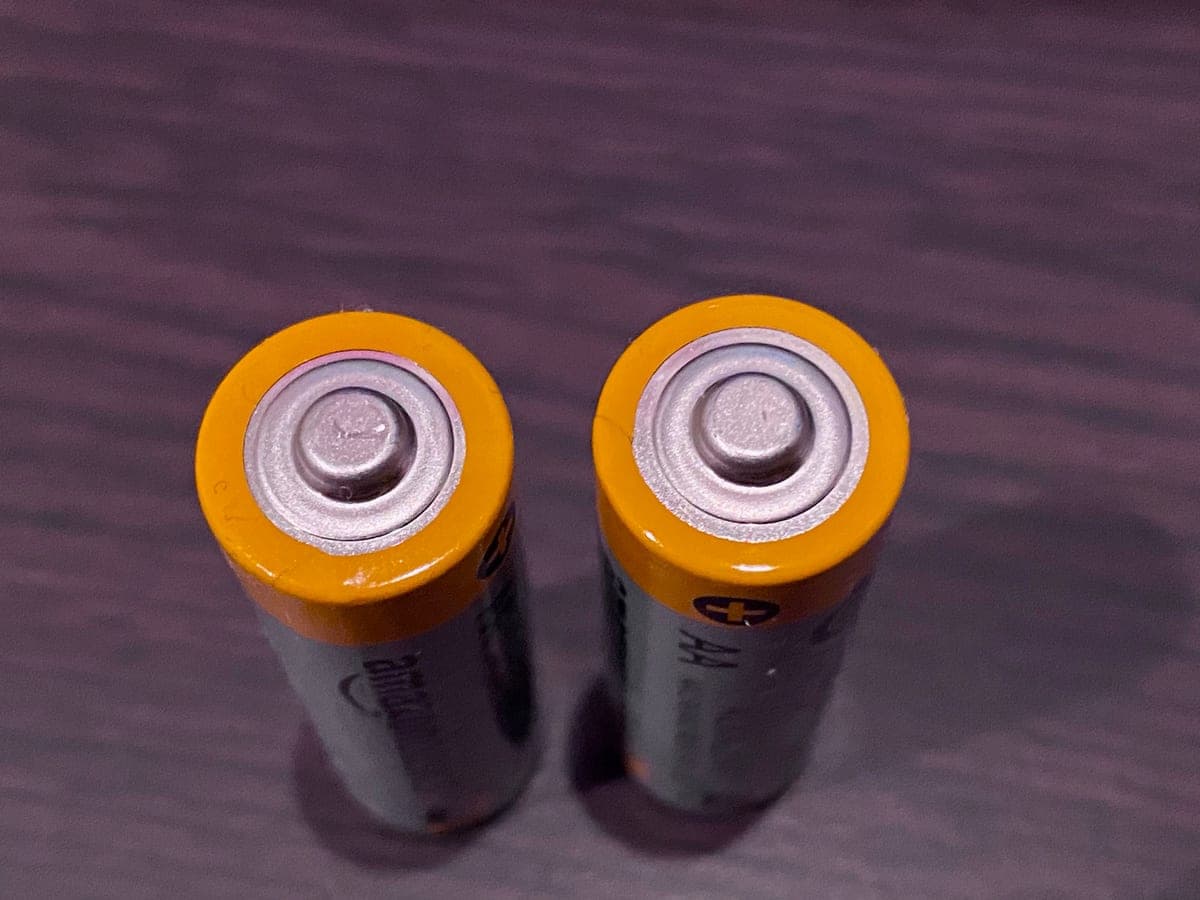
Energizer Ultimate Lithium AA
Batteries8.9/10The AA to put in a trail camera: rated from -40°F to 140°F, up to 25 years of shelf life, lighter than alkaline, and the battery Trailcampro uses for its life estimates.
Check price · Amazon#ad · Price set by Amazon · Disclosure for the link to Energizer Ultimate Lithium AA
 Stock photo
Best 12V battery box
HME Trail Camera 12V/Solar Auxiliary Power Pack
Battery pack7.5/10A sealed 12V 6Ah lead-acid battery in a waterproof box with a trickle-charge solar panel and a 10 ft cable: the cold-weather brute-force option for any camera with an external jack.
Check price · Amazon#ad · Price set by Amazon · Disclosure for the link to HME Trail Camera 12V/Solar Auxiliary Power Pack
 Stock photo
Best overall for multi-camera setups
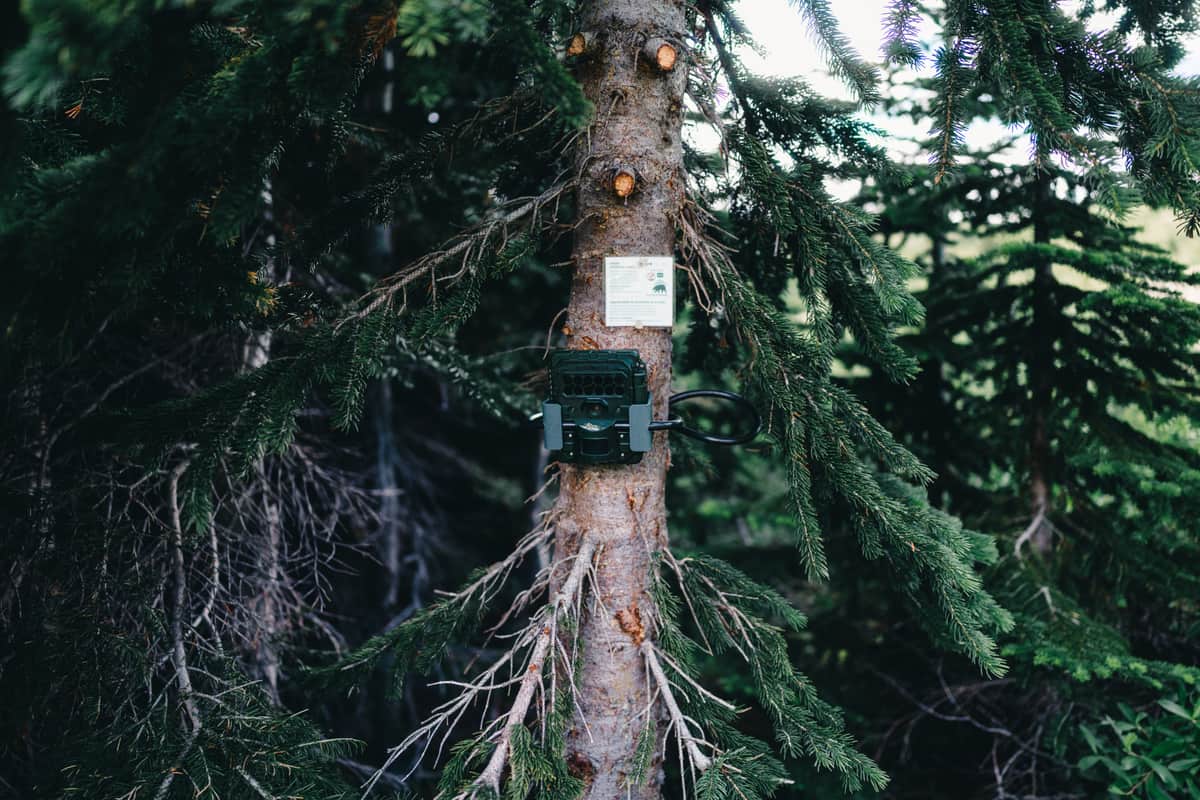
Tactacam Reveal X 3.0
Tactacam Reveal7.6/1012 AA plus a DC 12V input; Tactacam says the longest battery life in the Reveal line.
Check price · Amazon#ad · Price set by Amazon · Disclosure for the link to Tactacam Reveal X 3.0
How we scored this
Cameras we claim to have field-tested: none we don't own
Plenty of sites say they hung every camera on this list in a tree for a season. We don't say that, and we say so on every page. What we do instead: read the maker's published trigger speed, flash type, battery configuration and detection range; verify each brand's plan tiers on its own plan page and compute the real monthly cost at one and four cameras; cite the independent shootouts (Trailcampro, Outdoor Life, Field & Stream, TechGearLab) as their measurements, never ours; and score every pick on a public rubric. Every figure links to where it came from.
Scores are editorial judgments from that documented research, not lab results. Commissions never set a score or decide a pick. The rubric and its weights are published.
Questions
Frequently asked
What are the best batteries for a trail camera in cold weather?
Energizer Ultimate Lithium AAs, rated by Energizer from -40°F to 140°F with a flat voltage curve. For a camera with a 12V jack, add a sealed lead-acid box.
Do trail cameras work in cold weather?
The cameras do; the batteries are the problem. On lithium AAs a camera runs through a northern winter; on alkalines it dims and dies near freezing.
Do solar panels work on trail cameras in winter?
Poorly. The lithium banks under the panels charge badly below freezing and winter sun is low and short. Pre-charge the bank, treat the panel as a bonus, and use a lead-acid box for a set that must run all winter.
What is the best cellular trail camera for cold weather?
Any with a full AA tray and a 12V jack so you can run lithiums and a lead-acid box together: the Tactacam Reveal line and Browning's Defender line both list both. Set it to photo mode and once-a-day transmission.
Keep reading
Related on Cam & Canopy
Receipts
Sources
- Energizer — Ultimate Lithium AA product page (checked 2026-09-21)
- MicroBattery — Panasonic eneloop pro AA BK-3HCCA spec listing (checked 2026-09-21)
- HME Products — Trail Camera 12V/Solar Auxiliary Power Pack product page (checked 2026-09-21)
- Spypoint — Lithium Battery Solar Panel (10W) SPLB-22 product page (checked 2026-09-21)
- Tactacam — REVEAL Folding Solar Panel product page (checked 2026-09-21)
- Tactacam — REVEAL Solar Panel (RV-EXT-V2) product page (checked 2026-09-21)
- Moultrie — 3.4W Solar Power Pack II product page (checked 2026-09-21)
- HME Products — 5,000 mAh Solar Power Panel product page (checked 2026-09-21)
- Tactacam — REVEAL X 3.0 product page (checked 2026-09-21)
- Tactacam — Reveal camera comparison: X 3.0 vs Pro 3.0 vs Ultra (checked 2026-09-21)
- Browning Trail Cameras — Defender Pro Scout Max HD DV product page (checked 2026-09-21)
- Moultrie — POWER MAG III product page (checked 2026-09-21)
- Spypoint — LIT-22 rechargeable lithium battery pack product page (checked 2026-09-21)
We don't claim to have field-tested these cameras and we don't pretend to. Specs come from the maker's own product pages (linked on every product), plan prices from the maker's plan page with an “as of” date, and independent measurements are attributed to whoever made them. Amazon prices change often, so we don't print them. Where a figure isn't published, we say so. Read the full method.