Trail Cameras · The rankings
Best trail cameras for cold weather: the camera matters less than what you put in it
Almost every camera that dies in January did not break. It ran out of usable voltage, because alkaline cells lose most of their capacity below freezing and a cold flash pulls harder than a warm one. These are the cameras that survive a real winter, and the one thing that decides it.
By Mike M.Updated Spec-checked · every figure sourced
#adReader-supported: we may earn a commission if you buy through our links, at no extra cost to you. It never decides a ranking. How we rank · Disclosure
Quick picks
The rankings at a glance
| # | Product | Best for | Score | Price |
|---|---|---|---|---|
| 1 | No image GardePro T5NG Pro Trailcampro estimates 29.8 months in photo mode on lithium AA cells. Nothing else here asks less of you over a winter, and there is no plan to keep paying while the camera sleeps. | Best for a cold set with no planSD / Wi-Fi | 8.8 /10 | Check price · Amazon |
| 2 | 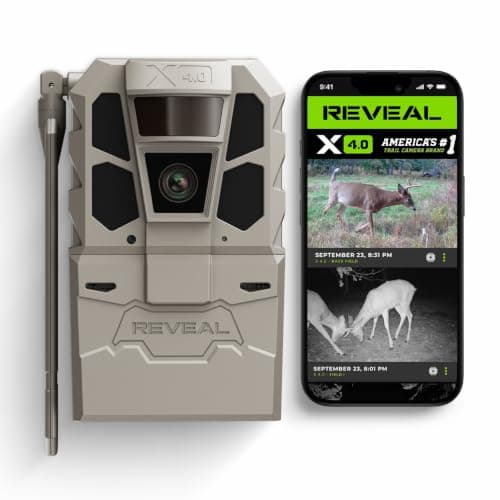 Tactacam Reveal X 4.0 Trailcampro measured 14.1 months of photos on Energizer Ultimate Lithium AAs, the longest measured cellular runtime in our registry. Twelve cells is a lot, and that is why it lasts. | Best cellular camera for winterTactacam Reveal | 7.7 /10 | $129.97Amazon |
| 3 | 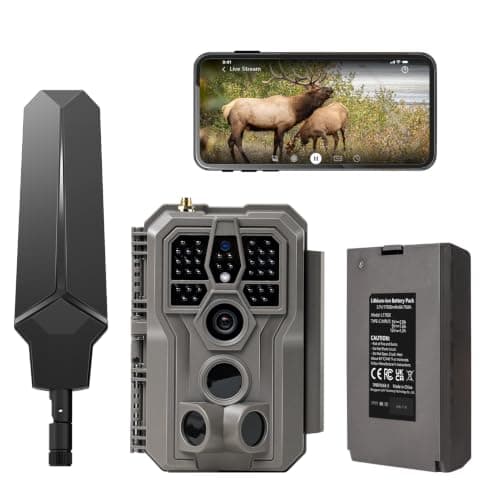 GardePro X66 3.0 Ultra A 17,500 mAh lithium pack in the box, rated for 300 charge cycles. When the sun is low and the days are short, stored capacity beats panel wattage. | Biggest internal packGardePro | 6.7 /10 | $139.99Amazon |
| 4 | 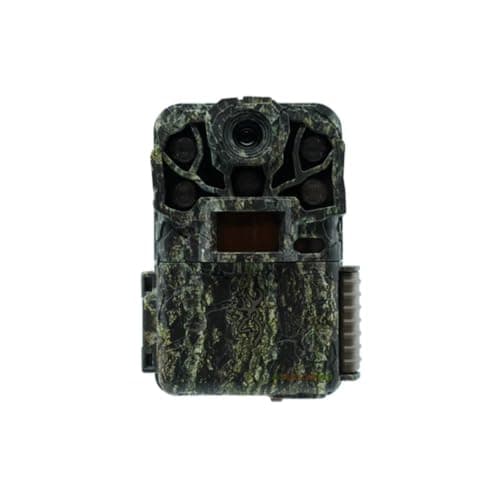 Browning Recon Force Elite HP5 Ultra A 12-volt jack and a battery meter Browning states works with alkaline, rechargeable and lithium cells. Hang a 12V box in a tree bag and the cold stops mattering. | Best with an external 12V supplySD / Wi-Fi | 8.7 /10 | $153.36Amazon |
| 5 | 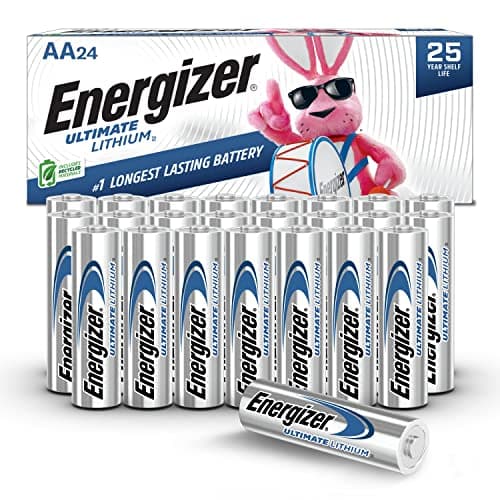 Energizer Ultimate Lithium AA Energizer rates these from -40 to 140 degrees Fahrenheit. Every runtime figure on this page assumes lithium primaries; swap in alkalines and you lose most of the winter. | The thing that actually decides itBatteries | 8.9 /10 | $41.98Amazon |
#ad · Prices come live from Amazon, last checked October 12, 2026. Scores are ours, built from published specs, verified plan prices and cited independent tests, not our own field measurements. Row photos are Amazon's own product images where a listing supplies one, and a blank panel where the maker sells elsewhere and supplies none. Tap a row for the full write-up.
What actually fails in the cold
Three things go wrong below freezing, and only one of them is the camera's fault.
The first is voltage sag. An alkaline AA cell holds its nominal 1.5 volts comfortably at room temperature and loses a large share of its usable capacity as it approaches 0°F. A trail camera does not fail gracefully when that happens: it keeps taking daylight photos, because a daylight exposure needs almost no current, and it stops producing usable night photos, because the infrared flash is the single biggest current draw in the housing. That is why the most common cold-weather complaint is black night images rather than a dead camera. The diagnosis order is in trail camera not taking night pictures.
The second is solar shortfall. A panel that keeps a camera topped up in July is working with fifteen hours of high-angle sun. In late December in the northern half of the country it has nine hours of low-angle sun, often through cloud, frequently under a dusting of snow that has to melt before the cell sees light. Integrated panels on cellular cameras are the most exposed to this, because the panel points wherever the lens points.
The third is moisture. Warm air inside a housing meets a cold lens, condenses, and freezes. That produces the foggy or milky images people blame on a failing sensor, and it is almost always a gasket and desiccant problem rather than an electronics problem. Covered in trail camera troubleshooting.
Battery chemistry, ranked for winter
| Cell type | Rated cold performance | Use it when |
|---|---|---|
| Lithium primary AA (Energizer Ultimate Lithium) | -40°F to 140°F, per Energizer | Always, for any winter set. Every runtime estimate on this page assumes these. |
| Low-self-discharge NiMH (Panasonic eneloop pro) | Rated performance down to -4°F, per the spec listing | Mild winters and sets you can service; 2,550 mAh and 500 recharges make them cheap over time. |
| Internal lithium pack (GardePro X66, Spypoint LIT-22, Moultrie POWER MAG) | Maker does not publish a temperature range; capacity is the published figure | When you would rather carry one pack than eight cells, and you can recharge it indoors. |
| 12V sealed lead acid in a box | Large reserve, poor cold efficiency, but the capacity absorbs it | Fixed sets you can reach by vehicle, on a camera with a 12V jack. |
| Alkaline AA | Loses most usable capacity approaching 0°F | Never, in winter. This is the single most common reason a camera “stopped working.” |
The deeper version of this table, including why a battery meter reads full on a cell that cannot fire a flash, is in trail camera batteries in cold weather.
The four cameras, side by side
Why solar is weakest when you need it
This is not an argument against solar. It is an argument for sizing solar by stored capacity rather than panel area. A camera with a small integrated panel and a 2,600 mAh pack has roughly a week of reserve if the sun stops; a camera with a 17,500 mAh pack has a season. The practical winter setup is a panel and a big pack, or a panel and an input you can top up from a 12V source.
Condensation, frost and the lens
Open the camera indoors and you load it with warm, humid air; close it, hang it, and that moisture condenses on the inside of the cold lens. Three habits fix it. Load batteries and cards in a cold garage or at the truck rather than a heated kitchen. Keep a fresh silica packet in the housing and replace it each time you open the camera. And seat the gasket deliberately: most “waterproof” failures are a strap pulling the case slightly out of square against a tree with a ridge in the bark.
Mounting matters more in winter for a second reason: bare branches move more in wind, and a camera aimed through them fires all day. If you are on a per-photo plan, that is a direct cost. False triggers and placement cover the fix.
In detail
The picks, in full
Rank 1
Best for a cold set with no plan
GardePro T5NG Pro
Trailcampro estimates 29.8 months in photo mode on lithium AA cells. Nothing else here asks less of you over a winter, and there is no plan to keep paying while the camera sleeps.
Spec sheetSpec-checked · sources linked
How the 8.8 score breaks down
- Trigger speed & recovery (25%)
- 6
- Night image quality (25%)
- 9
- Battery life (20%)
- 10
- Detection range & field of view (15%)
- 10
- Ease of use & value (15%)
- 10
What the spec sheet supports
- 91/100 at Trailcampro, from measured figures rather than a maker claim
- 120 ft of measured detection, the longest on the SD cameras we rank
- 29.8 months of photo-mode battery on 8 AAs by Trailcampro's estimate
- A screen on the camera, so you aim and check it without a laptop
Where it falls short
- 0.51 s trigger is a feeder-and-scrape figure, not a crossing figure
- Trailcampro flags it as sensitive to vegetation in the detection lane
- Video mode cuts the battery estimate to 6 months
- Trailcampro notes no hole to lock the latch, and that Apple users need the Files app
Skip this if…
…you are covering a pinch point where deer move through fast; a Browning HP5 Ultra body triggers in 0.1 to 0.7 s and you can set it.
#ad · Price as of October 12, 2026 · Disclosure for the link to GardePro T5NG Pro
Rank 2
Best cellular camera for winter
Tactacam Reveal X 4.0
Trailcampro measured 14.1 months of photos on Energizer Ultimate Lithium AAs, the longest measured cellular runtime in our registry. Twelve cells is a lot, and that is why it lasts.
Spec sheetSpec-checked · sources linked
How the 7.7 score breaks down
- Trigger speed & recovery (20%)
- 7
- Night image quality (20%)
- 7
- Battery & solar life (20%)
- 9
- Real monthly plan cost (20%)
- 8
- Detection range & field of view (10%)
- 8
- App, setup & reliability (10%)
- 7
What the spec sheet supports
- 0.29 s measured trigger: the fastest figure on this page
- 14.1 months of photo battery life measured by Trailcampro, the longest here
- 90 ft measured detection, 10 ft further than the Pro 4.0
- Same unlimited Live View sessions as the Pro for less camera money
Where it falls short
- Low-glow only: a faint red glow at night, and no no-glow option in the app
- No screen at all, so aiming and every Live View session go through the phone
- 11.1-second measured photo recovery, the same weakness as the Pro 4.0
- Live View is still $6/mo per camera on top of the data plan
Skip this if…
…the set is a pressured public-land trail or a gate you're watching for people; buy the selectable-flash Pro 4.0 or a 940nm no-glow camera instead.
#ad · Price as of October 12, 2026 · Disclosure for the link to Tactacam Reveal X 4.0
Rank 3
Biggest internal pack
GardePro X66 3.0 Ultra
A 17,500 mAh lithium pack in the box, rated for 300 charge cycles. When the sun is low and the days are short, stored capacity beats panel wattage.
Spec sheetSpec-checked · sources linked
| Plan ecosystem | GardePro. The plan decides the running cost; see the plan explainer linked on this page. |
|---|---|
| Plan | First plan free for one month; multi-camera shared data plan (tier prices not published on the product page) |
| Detection range | 100 ft PIR (maximum) |
| Flash | No-glow infrared |
| Flash range | 100 ft (maximum) |
| Photo resolution | Uploads 540p photos by default; HD and Full HD on request |
| Video | 4K at 20 fps, 2K at 30 fps, 1080p at 30 fps |
| Batteries | 17,500 mAh lithium battery included, 300 charge cycles; about 3 months typical (maker estimate) |
| Solar | SP300 and SP1000 (10W) panels, sold separately |
| App features | GPS location update once a day by default; AI identification |
How the 6.7 score breaks down
- Trigger speed & recovery (20%)
- 5
- Night image quality (20%)
- 8
- Battery & solar life (20%)
- 9
- Real monthly plan cost (20%)
- 5
- Detection range & field of view (10%)
- 7
- App, setup & reliability (10%)
- 6
What the spec sheet supports
- 17,500 mAh lithium included: the biggest battery any camera here ships with
- No-glow and 4K recording
- $139.99 on GardePro's page with the battery included
Where it falls short
- GardePro publishes no trigger speed for this model
- Default uploads are 540p; HD costs plan credits
- Plan tiers aren't on the product page, so the running cost is unverified
Skip this if…
…you want published trigger and plan numbers you can compare; this one leaves both blank.
#ad · Price as of October 12, 2026 · Disclosure for the link to GardePro X66 3.0 Ultra
Rank 4
Best with an external 12V supply
Browning Recon Force Elite HP5 Ultra
A 12-volt jack and a battery meter Browning states works with alkaline, rechargeable and lithium cells. Hang a 12V box in a tree bag and the cold stops mattering.
Spec sheetSpec-checked · sources linked
| Category | SD / Wi-Fi |
|---|---|
| Trigger speed | Adjustable 0.1 to 0.7 s |
| Recovery time | 0.5 s |
| Detection range | Adjustable, up to 100 ft |
| Flash | 5 high-power IR LEDs, adjustable (Power Save, Long Range, Fast Motion); a visible-IR (low-glow class) unit |
| Flash range | 130 ft infrared flash range |
| Photo resolution | 46MP image capability |
| Video | 1440 FHD videos with sound, 5 s to 2 min, at 30 or 60 frames per second |
| Batteries | 8 AA (not included); battery meter works with alkaline, rechargeable and lithium |
| External power | 12-volt external power jack |
| App features | 2-inch color viewing screen |
| Storage | Up to 512GB SDXC |
| Fits | In stock at Trailcampro at $159.95 with a 92/100 score; Browning's own store showed it 'Unavailable' at $169.99 |
How the 8.7 score breaks down
- Trigger speed & recovery (25%)
- 9
- Night image quality (25%)
- 9
- Battery life (20%)
- 8
- Detection range & field of view (15%)
- 8
- Ease of use & value (15%)
- 9
What the spec sheet supports
- 60 fps at 1440p is the only high-frame-rate video option we've verified on a trail camera
- Video carries sound, which no cellular upload on this site does
- 130 ft of published IR reach, the longest flash range on the SD side here
- Trigger AND detection range are both adjustable, and recovery is a stated 0.5 s
Where it falls short
- Visible IR, not no-glow; Browning's Spec Ops line is the covert version of the same body
- Not 4K: 1440p is the ceiling
- Out of stock at Browning's own store when we checked
Skip this if…
…you want no-glow for a camera near a road or a property line; buy the Spec Ops Elite HP5 Ultra instead, same body, invisible flash.
#ad · Price as of October 12, 2026 · Disclosure for the link to Browning Recon Force Elite HP5 Ultra
Rank 5
The thing that actually decides it
Energizer Ultimate Lithium AA
Energizer rates these from -40 to 140 degrees Fahrenheit. Every runtime figure on this page assumes lithium primaries; swap in alkalines and you lose most of the winter.
Spec sheetSpec-checked · sources linked
| Category | Batteries |
|---|---|
| Batteries | Performs from -40°F to 140°F |
| Capacity | Up to 25 years in storage; 'world's longest lasting AA' (maker claim) |
| Warranty | Leak-proof, guaranteed based on standard use |
How the 8.9 score breaks down
- Fit & compatibility (30%)
- 10
- Capacity & output (30%)
- 9
- Weather durability (20%)
- 10
- Value (20%)
- 6
What the spec sheet supports
- Rated to -40°F, which alkalines are not
- Leak-proof guarantee matters in a camera that sits outside for months
- Trailcampro's 31-month T5NG estimate assumes these
Where it falls short
- Cost per cell is several times alkaline
- 1.5V lithium isn't rechargeable; you buy them again every season
Skip this if…
…you swap cards weekly anyway and the set is warm; alkalines are cheaper for short runs.
#ad · Price as of October 12, 2026 · Disclosure for the link to Energizer Ultimate Lithium AA
Buyer's guide: a camera that survives a real winter
Count cells, then pick chemistry
Eight lithium AA cells in a camera rated for a year is a different proposition from sixteen in a camera rated for a season. More cells means more capacity and a bigger bill. Decide the bill you are willing to pay per camera per winter, then buy the body that fits it.
Prefer a 12V jack to a bigger battery tray
A 12-volt external jack is the most future-proof power port on a trail camera: it accepts a battery box, a panel, or an AC adapter near a building. Four of the five picks on this page can be fed externally. See 12V battery boxes.
On a cellular camera, winter is when the plan feels expensive
Deer movement concentrates and then goes quiet. A per-camera plan bills the same in February as in November. If you pull cameras for part of the year, prefer a brand you can pause, or a card camera for the sets you do not need live. The pause and no-fee options are in cellular cameras with no monthly fee.
No-glow costs battery, and in winter that is a real trade
940nm emitters are less efficient than 850nm ones, so an invisible flash draws more current for the same illumination. On a cold set at the edge of its battery budget, that is one more reason the chemistry decision comes first. The trade-off: no-glow vs low-glow.
Set it for winter, not for summer
Drop the burst count, turn video off unless you need it, and widen the recovery delay. Video mode costs several times what photo mode does on every measured camera in our registry — the T5NG Pro drops from 29.8 months to about 6, and the Reveal X 4.0 from 14.1 months to 4.1. Settings guidance: trail camera settings.
How we scored this
The research behind these picks
Every pick here is built from documented evidence: the maker's published trigger speed, flash type, battery configuration and detection range; each brand's plan tiers verified on its own plan page and turned into the real monthly cost at one and four cameras; the independent shootouts (Trailcampro, Outdoor Life, Field & Stream, TechGearLab) cited by name for the measurements they published; and a public rubric applied the same way to every model. Every figure links to where it came from, so you can check our work in one click.
Scores are editorial judgments from that documented research. Commissions never set a score or decide a pick. The rubric and its weights are published.
Corrections & updates
- Published. Cold-temperature ratings read on Energizer's and the eneloop spec listing; runtime figures are Trailcampro measurements.
Questions
Frequently asked
What is the best trail camera for cold weather?
The GardePro T5NG Pro, if you do not need cellular: Trailcampro estimates 29.8 months of photo-mode runtime on lithium AA cells, and it has no plan to keep paying over a quiet winter. For a cellular set, the Tactacam Reveal X 4.0 measured the longest runtime we have on record at 14.1 months of photos.
What batteries work best in a trail camera in cold weather?
Lithium AA primaries. Energizer rates its Ultimate Lithium cells from -40°F to 140°F. Alkalines lose most of their usable capacity near 0°F, and the symptom is black night photos rather than a dead camera. Rechargeable NiMH cells such as eneloop pro are rated down to -4°F and are a reasonable choice in mild winters.
Do solar trail cameras work in winter?
They work, but with far less margin: shorter days, lower sun angle and snow on the panel. Size the set by stored capacity rather than panel area, face the panel south even if the camera faces north, and angle it steeply so snow slides off.
Why does my trail camera stop taking night pictures in the cold?
Because the infrared flash is the largest current draw in the camera and cold cells cannot deliver that current, even when the battery meter still reads partly full. Daylight photos keep working, which makes it look like a night-vision fault. Change to lithium cells first, before you suspect the camera.
How do I stop condensation inside a trail camera?
Load cards and batteries outdoors or in an unheated space rather than a warm house, keep a fresh desiccant packet in the housing and replace it on each visit, and make sure the gasket seats evenly against the case rather than being pulled out of square by the strap.
Keep reading
Related on Cam & Canopy
- Trail camera batteries in cold weatherThe chemistry argument in full, with the voltage curves.
- Best batteries for trail camerasWhat to actually buy, lithium and rechargeable.
- Best trail cameras for battery lifeThe same question without the cold.
- Trail camera battery life explainedWhy photo mode and video mode differ by five times.
- Best trail camera solar panelsAimable panels for a low winter sun.
- Not taking night picturesThe diagnosis order when the flash stops working.
Receipts
Sources
- Energizer — Ultimate Lithium AA product page (checked 2026-09-21)
- MicroBattery — Panasonic eneloop pro AA BK-3HCCA spec listing (checked 2026-09-21)
- Trailcampro — GardePro T5NG Pro review, measured figures, score and stock (checked 2026-09-28)
- Trailcampro — Tactacam Reveal X 4.0 product page, measured figures and stock (checked 2026-09-24)
- GardePro — X66 3.0 Ultra product page (checked 2026-09-21)
- Browning Trail Cameras — Recon Force Elite HP5 Ultra product page (checked 2026-09-26)
- Tactacam — REVEAL X 4.0 product page (checked 2026-09-24)
- Spypoint — Lithium Battery Solar Panel (10W) SPLB-22 product page (checked 2026-09-21)
- GardePro — SP350 solar panel with 5,200 mAh battery product page (checked 2026-09-28)
Every number above is traceable: specs come from the maker's own product pages (linked on every product), plan prices from the maker's plan page with an “as of” date, and independent measurements are attributed to whoever made them. Amazon prices change often, so every buy button takes you to Amazon's current price for that listing. Read the full method.