Power · The rankings
Best batteries for trail cameras: lithium first, rechargeable second, alkaline never in winter
Lithium AAs cost more per cell and are the cheapest thing on this site per photo. Rechargeables pay off across a multi-camera setup with one catch. Alkalines are for summer. Here's the evidence and the arithmetic.
By Mike M.Updated Spec-checked, not field-tested
#adReader-supported: we may earn a commission if you buy through our links, at no extra cost to you. It never decides a ranking. How we rank · Disclosure
Quick picks
The rankings at a glance
| # | Product | Best for | Score | Price |
|---|---|---|---|---|
| 1 | 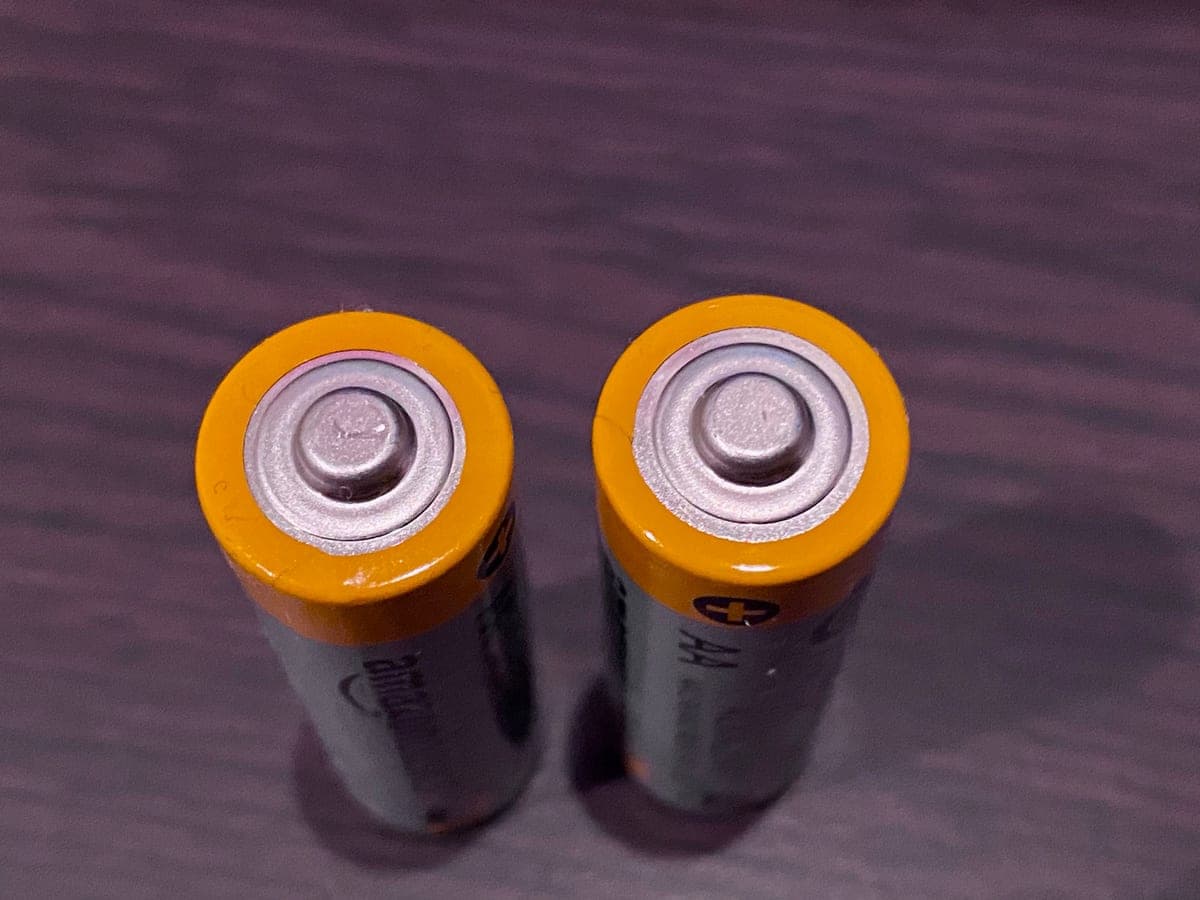 Energizer Ultimate Lithium AA The AA to put in a trail camera: rated from -40°F to 140°F, up to 25 years of shelf life, lighter than alkaline, and the battery Trailcampro uses for its life estimates. | Best trail camera batteryBatteries | 8.9 /10 | Check price · Amazon |
| 2 | Panasonic eneloop pro AA The rechargeable AA that behaves: 2,550 mAh, 500 cycles, 85% charge held for a year, and rated to -4°F. The catch is 1.2V, which some cameras read as low. | Best rechargeableBatteries | 7.7 /10 | Check price · Amazon |
| 3 |  Spypoint LIT-22 Lithium Battery Pack A 7.4V, 5.4Ah lithium pack that replaces the Flex AA tray; Spypoint claims up to 12 months on a Flex-M2 with it. | Best AA replacement (Spypoint)Battery pack | 8.2 /10 | Check price · Amazon |
| 4 | Moultrie POWER MAG III A 5,000 mAh / 54 Wh USB-C pack Moultrie rates at 18 AA equivalent and 800 charge cycles, for every Edge camera. | Best AA replacement (Moultrie)Battery pack | 8.3 /10 | Check price · Amazon |
#ad · Prices are set by Amazon and change often, so we don't print them. Scores are ours, built from published specs, verified plan prices and cited independent tests, not our own field measurements. Photos are illustrative stock. Tap a row for the full write-up.
Three chemistries, one job
- Lithium primary (1.5V, not rechargeable). Energizer publishes -40°F to 140°F, up to 25 years in storage, and a leak-proof guarantee "based on standard use." Flat discharge curve: the camera sees full voltage until nearly the end, so the IR flash stays bright. Highest cost per cell, lowest cost per photo in cold weather.
- NiMH rechargeable (1.2V). Panasonic's eneloop pro: 2,550 mAh typical, "up to 500" recharges, holds 85% of charge for a year, rated to -4°F. Cheap per cycle. The catch is the voltage; see below.
- Alkaline (1.5V nominal, sagging). Voltage drops steadily as it discharges, and drops hard in cold. The IR flash dims before the camera dies; you get dark night photos, then a low-battery warning, then a leak. Fine for a summer inventory set you check monthly.
The picks, side by side
| Evidence | Energizer Ultimate Lithium AA | Panasonic eneloop pro AA | Spypoint LIT-22 Lithium Battery Pack | Moultrie POWER MAG III |
|---|---|---|---|---|
| Batteries | Performs from -40°F to 140°F | Rechargeable up to 500 times; holds 85% of charge for up to a year | Flex-M2: up to 12 months on a LIT-22 versus up to 6 months on AAs (maker claim) | — |
| Capacity | Up to 25 years in storage; 'world's longest lasting AA' (maker claim) | 2,550 mAh typical (2,450 mAh minimum) at 1.2V | 5.4 amp-hours | 5,000 mAh / 54 Wh at 10.8V; '18 AA' equivalent (maker claim) |
| Output | — | Rated performance down to -4°F | 7.4 volts | 18W peak, 12V / 1.5A |
| Fits | — | — | Flex series: Flex, Flex G-36, Flex E-36, Flex-M, Flex-S, Flex-Plus; slides in once the AA tray is removed | All Edge series cameras |
| Warranty | Leak-proof, guaranteed based on standard use | — | — | — |
| Score | 8.9/10 | 7.7/10 | 8.2/10 | 8.3/10 |
Cost per season: the arithmetic
The 1.2V problem with rechargeables
A camera's battery meter is calibrated for 1.5V cells. Twelve NiMH cells at 1.2V read as a partly discharged pack from the first day, and some cameras throw a low-battery warning or refuse to fire the flash at full power. Browning's Spec Ops HP5 Ultra page explicitly lists "alkaline, rechargeable, and lithium" as supported; Stealth Cam lists the Deceptor Max 3.0 as "recharge compatible." If your camera's manual doesn't say rechargeables are supported, try one set before buying four. And in real cold, eneloop's -4°F floor is a long way from lithium's -40°F.
The other way out is a brand tray pack that replaces the AAs with a proper lithium-ion cell at the right voltage: Spypoint's LIT-22 (7.4V, 5.4Ah) and Moultrie's POWER MAG III (10.8V, 5,000 mAh, rated "18 AA"). Those are in best battery packs.
In detail
The picks, in full
Rank 1
Stock photoBest trail camera battery
Energizer Ultimate Lithium AA
The AA to put in a trail camera: rated from -40°F to 140°F, up to 25 years of shelf life, lighter than alkaline, and the battery Trailcampro uses for its life estimates.
Spec sheetSpec-checked · not field-tested by us
| Category | Batteries |
|---|---|
| Batteries | Performs from -40°F to 140°F |
| Capacity | Up to 25 years in storage; 'world's longest lasting AA' (maker claim) |
| Warranty | Leak-proof, guaranteed based on standard use |
How the 8.9 score breaks down
- Fit & compatibility (30%)
- 10
- Capacity & output (30%)
- 9
- Weather durability (20%)
- 10
- Value (20%)
- 6
What the spec sheet supports
- Rated to -40°F, which alkalines are not
- Leak-proof guarantee matters in a camera that sits outside for months
- Trailcampro's 31-month T5NG estimate assumes these
Where it falls short
- Cost per cell is several times alkaline
- 1.5V lithium isn't rechargeable; you buy them again every season
Skip this if…
…you swap cards weekly anyway and the set is warm; alkalines are cheaper for short runs.
#ad · Price set by Amazon · Disclosure for the link to Energizer Ultimate Lithium AA
Rank 2
Stock photoBest rechargeable
Panasonic eneloop pro AA
The rechargeable AA that behaves: 2,550 mAh, 500 cycles, 85% charge held for a year, and rated to -4°F. The catch is 1.2V, which some cameras read as low.
Spec sheetSpec-checked · not field-tested by us
| Category | Batteries |
|---|---|
| Batteries | Rechargeable up to 500 times; holds 85% of charge for up to a year |
| Output | Rated performance down to -4°F |
| Capacity | 2,550 mAh typical (2,450 mAh minimum) at 1.2V |
How the 7.7 score breaks down
- Fit & compatibility (30%)
- 7
- Capacity & output (30%)
- 8
- Weather durability (20%)
- 7
- Value (20%)
- 9
What the spec sheet supports
- Low self-discharge, so a charged spare set is still charged in November
- 500 cycles amortizes the price quickly on a multi-camera setup
- Browning's Spec Ops page explicitly lists rechargeable AAs as supported
Where it falls short
- 1.2V nominal: some cameras show low battery early or won't power the flash fully
- -4°F floor versus -40°F for lithium primaries
Skip this if…
…your camera manual specifies 1.5V cells or you hunt where January nights go below zero.
#ad · Price set by Amazon · Disclosure for the link to Panasonic eneloop pro AA
Rank 3
Stock photoBest AA replacement (Spypoint)
Spypoint LIT-22 Lithium Battery Pack
A 7.4V, 5.4Ah lithium pack that replaces the Flex AA tray; Spypoint claims up to 12 months on a Flex-M2 with it.
Spec sheetSpec-checked · not field-tested by us
| Category | Battery pack |
|---|---|
| Batteries | Flex-M2: up to 12 months on a LIT-22 versus up to 6 months on AAs (maker claim) |
| External power | AC charging cable included |
| Fits | Flex series: Flex, Flex G-36, Flex E-36, Flex-M, Flex-S, Flex-Plus; slides in once the AA tray is removed |
| Output | 7.4 volts |
| Capacity | 5.4 amp-hours |
How the 8.2 score breaks down
- Fit & compatibility (30%)
- 8
- Capacity & output (30%)
- 8
- Weather durability (20%)
- 8
- Value (20%)
- 9
What the spec sheet supports
- Doubles the Flex-M2's claimed runtime versus AAs
- Slides into the tray slot; nothing to route or mount
- $49.99 list
Where it falls short
- Spypoint only
- You need a second pack to swap without downtime
- Charging is indoors on AC; pair with the SPLB-22 for the field
Skip this if…
…you run anything other than a Spypoint Flex.
#ad · Price set by Amazon · Disclosure for the link to Spypoint LIT-22 Lithium Battery Pack
Rank 4
Stock photoBest AA replacement (Moultrie)
Moultrie POWER MAG III
A 5,000 mAh / 54 Wh USB-C pack Moultrie rates at 18 AA equivalent and 800 charge cycles, for every Edge camera.
Spec sheetSpec-checked · not field-tested by us
| Category | Battery pack |
|---|---|
| External power | USB-C, 4-hour charge; 800 charge cycles |
| Fits | All Edge series cameras |
| Output | 18W peak, 12V / 1.5A |
| Capacity | 5,000 mAh / 54 Wh at 10.8V; '18 AA' equivalent (maker claim) |
| Dimensions | 4.46 x 2.59 x 1.34 in; 0.65 lb |
How the 8.3 score breaks down
- Fit & compatibility (30%)
- 8
- Capacity & output (30%)
- 9
- Weather durability (20%)
- 8
- Value (20%)
- 8
What the spec sheet supports
- Published capacity, cycles and dimensions, unlike most packs
- Four-hour USB-C charge
- $49.99 list; 2- and 3-packs for rotation
Where it falls short
- Moultrie Edge only
- No runtime claim published
Skip this if…
…you don't run an Edge.
#ad · Price set by Amazon · Disclosure for the link to Moultrie POWER MAG III
Buyer's guide: batteries
Never mix
Don't mix chemistries or old and new cells in one tray; the weakest cell sets the pack's voltage and can reverse-charge. One set, one date, written on the tray with a marker.
Fill every slot
A 12-AA camera on 6 AAs runs, but at half the capacity and often with a dimmer flash. Tactacam and Stealth Cam list 12 and 16 AA; Browning's Strike Force lists 6, Spec Ops and Defender 8. Fill what the camera takes.
Lithium and the meter
Because lithium holds voltage until the end, the meter can read "full" for months and then drop fast. That's normal. Swap on a schedule in cold weather rather than waiting for the warning.
When to skip AAs entirely
If your camera has a jack or a tray-pack option, a pack plus a panel removes the question; see solar panels. For January, read batteries in cold weather first.
How we scored this
Cameras we claim to have field-tested: none we don't own
Plenty of sites say they hung every camera on this list in a tree for a season. We don't say that, and we say so on every page. What we do instead: read the maker's published trigger speed, flash type, battery configuration and detection range; verify each brand's plan tiers on its own plan page and compute the real monthly cost at one and four cameras; cite the independent shootouts (Trailcampro, Outdoor Life, Field & Stream, TechGearLab) as their measurements, never ours; and score every pick on a public rubric. Every figure links to where it came from.
Scores are editorial judgments from that documented research, not lab results. Commissions never set a score or decide a pick. The rubric and its weights are published.
Questions
Frequently asked
What are the best batteries for a trail camera?
Energizer Ultimate Lithium AAs: rated -40°F to 140°F, leak-proof guarantee, 25-year shelf life, flat voltage so the flash stays bright. They're what Trailcampro uses for its battery-life estimates.
Can I use rechargeable batteries in a trail camera?
Often, if the camera supports 1.2V NiMH (Browning's Spec Ops page lists rechargeables; Stealth Cam's Deceptor Max 3.0 is "recharge compatible"). Expect early low-battery readings and a -4°F floor on eneloop pro versus -40°F for lithium.
Are lithium batteries worth it for trail cameras?
In cold weather, yes without question: alkalines sag and dim the flash. In summer on a camera you check monthly, alkalines are cheaper and fine.
How long do lithium batteries last in a trail camera?
Trailcampro estimated 31.1 months in photo mode (5.7 in video mode) on a GardePro T5NG with Energizer Ultimate Lithium. Cellular cameras draw more; Spypoint claims up to 6 months on AAs for a Flex-M2. Depends on triggers, night activity and cold.
Keep reading
Related on Cam & Canopy
Receipts
Sources
- Energizer — Ultimate Lithium AA product page (checked 2026-09-21)
- MicroBattery — Panasonic eneloop pro AA BK-3HCCA spec listing (checked 2026-09-21)
- Trailcampro — GardePro T5NG review, measured figures (checked 2026-09-21)
- Spypoint — LIT-22 rechargeable lithium battery pack product page (checked 2026-09-21)
- Spypoint — FLEX series overview (checked 2026-09-21)
- Moultrie — POWER MAG III product page (checked 2026-09-21)
- Browning Trail Cameras — Spec Ops Elite HP5 Ultra product page (checked 2026-09-21)
- Stealth Cam — Deceptor Max 3.0 product page (checked 2026-09-21)
- Tactacam — REVEAL X 3.0 product page (checked 2026-09-21)
- Browning Trail Cameras — Strike Force Pro X 1080 product page (checked 2026-09-21)
We don't claim to have field-tested these cameras and we don't pretend to. Specs come from the maker's own product pages (linked on every product), plan prices from the maker's plan page with an “as of” date, and independent measurements are attributed to whoever made them. Amazon prices change often, so we don't print them. Where a figure isn't published, we say so. Read the full method.