Scouting · Guide
Trail camera false triggers: why it photographs nothing, and the order to fix it
A camera firing on an empty trail is not broken. A PIR sensor detects moving heat differentials, and a sunlit leaf moving in front of a cool background is a moving heat differential. Here is the order to work through it, and the one setting most people get backwards.
By Mike M.Updated Spec-checked · every figure sourced
#adReader-supported: we may earn a commission if you buy through our links, at no extra cost to you. It never decides a ranking. How we rank · Disclosure
Why a PIR sensor fires on nothing
A trail camera does not see shapes. Its passive infrared sensor is divided into zones, and it fires when the infrared energy in one zone changes relative to its neighbors quickly enough to look like a body moving across the field. That is a deliberately crude test, because it has to run on milliwatts for two years.
Three things pass that test without being an animal. A sunlit leaf or grass head swinging in and out of shade produces a genuine, fast heat differential. Ground or rock warmed by direct sun radiates unevenly as air moves over it, which is why hot still afternoons produce bursts of empty frames. And a frame containing open sky gives the sensor a very cold reference, so any warm object moving against it reads as enormous contrast.
That is also why the problem is seasonal and directional. The same camera that behaved all winter starts filling a card in April, when leaves appear in the detection lane and the sun climbs. Nothing about the camera changed. More on the mechanism in detection range explained.
The diagnosis order
Work through these in sequence and stop when the empty frames stop. The order matters: the first three cost you nothing and lose you no detection performance, while the fourth trades real animals for fewer false frames.
1. Sun angle and sky in the frame
Aim the camera north if you possibly can. A north-facing camera never has the sun in or near its field of view, which removes direct glare, lens flare and the worst of the thermal churn. East and west are the worst aims, because low sun passes directly through the detection fan at the times animals actually move.
Then look at how much sky is in the top of the frame. If the camera is aimed slightly up a slope or across a gap, you are giving the sensor a very cold background to compare everything against. Tilt the camera down until the horizon leaves the frame. You will also get better photos, because the exposure meter stops being dominated by bright sky.
2. Vegetation in the detection lane
Clear a lane, not a clearing. Everything within about twenty-five feet of the camera and inside the detection fan should be free of anything that moves: grass heads, saplings, hanging vines, the end of a branch that only reaches in when the wind blows from one direction. Walk behind the camera and sight along it, because the things that trigger it are usually low and close rather than out at the far end of the range.
3. Height, angle and distance
Raising the camera and angling it downward does two useful things at once: it lifts the detection fan above ground-level grass, and it shortens the effective detection distance so the sensor is looking at a patch of ground rather than out to the horizon. Chest height angled slightly down is the standard starting point, and the reasoning is in trail camera height.
Distance matters for a related reason. A camera set twenty feet from a trail with the trail crossing diagonally sees animals clearly and has very little background in frame. A camera set sixty feet back has four times the area of vegetation and sky inside its fan. Closer is almost always better, and the full argument is in trail camera placement.
4. Settings, in the right order
Only now touch the menu, and in this sequence.
Recovery delay first. Raising the delay from five seconds to thirty does not reduce detections, it reduces duplicates. If a sunlit branch is firing the camera every ten seconds, a thirty-second delay cuts the volume by two thirds without blinding the camera to anything.
Burst count second. Drop from nine or five images to one or three. Every empty event then costs a third of what it did, and on a cellular plan that is a direct saving.
Operational hours third. If the empty frames are concentrated between 11am and 4pm, switch the camera off for those hours. You lose almost no real data in most seasons.
PIR sensitivity last, and only one step. Lowering sensitivity shrinks the detection range for animals as well as for grass. A camera at low sensitivity will miss a doe at eighty feet. If you have worked through the first three steps and still have a problem, go from high to medium, not from high to low. The settings reference is in trail camera settings.
Cameras that filter it in hardware
Our picks for this
Four cameras with zone masking or AI filtering
If you run cellular cameras, the two features worth paying for are PIR zone selection and on-camera false-image rejection. They solve the problem without turning sensitivity down.
Best no-glow flash array
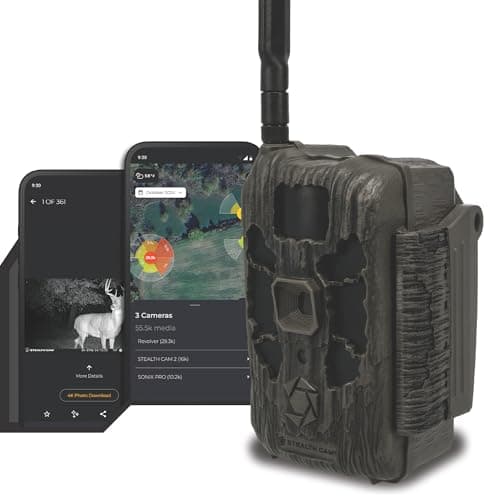
Stealth Cam Deceptor Max 3.0
Stealth Cam Command7.6/10PIR zone selection lets you mask the part of the fan that contains the moving branch, and Command AI discards empty frames before they upload. The most complete answer in our registry.
$115.11Amazon#ad · Price as of October 11, 2026 · Disclosure for the link to Stealth Cam Deceptor Max 3.0
Best value cellular camera
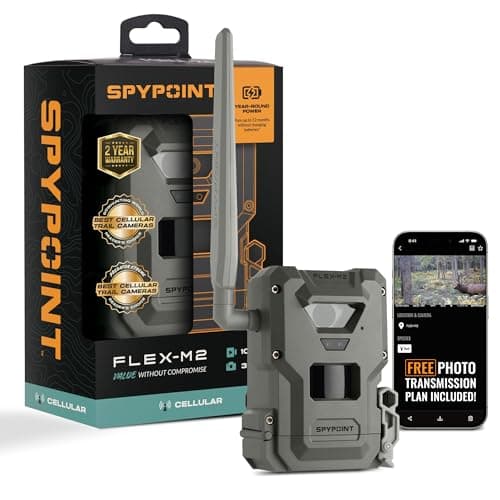
Spypoint Flex-M2
Spypoint7.5/10Smart Send and Buck Tracker filter what reaches your phone, and the free 100-photo tier means an empty-frame problem is annoying rather than expensive.
$59.99Amazon#ad · Price as of October 11, 2026 · Disclosure for the link to Spypoint Flex-M2
Best detection cellular camera
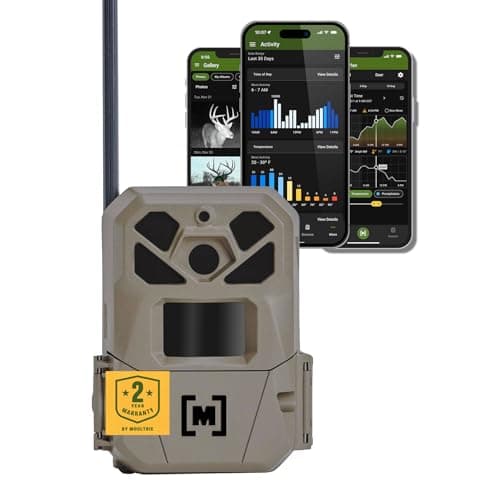
Moultrie Edge 3 Pro
Moultrie Mobile8.0/10Moultrie AI tags and sorts on the server side, and the 0.30 s trigger means fewer missed real animals when you do reduce sensitivity.
$98.99Amazon#ad · Price as of October 11, 2026 · Disclosure for the link to Moultrie Edge 3 Pro
- GardeProNo image
Best measured value
GardePro T5NG Pro
SD / Wi-Fi8.8/10A card camera with adjustable PIR sensitivity, operational hours and an internal screen, so you can see what the camera sees while you are standing at the tree.
Check price · Amazon#ad · Price as of October 11, 2026 · Disclosure for the link to GardePro T5NG Pro
What false triggers actually cost you
On a card camera the cost is your time and your batteries. A thousand empty night frames is a thousand flash pulses, and that is the difference between a camera that runs a season and one that runs six weeks — the measured photo-mode runtimes in best trail cameras for battery life all assume a sane trigger rate.
On a cellular camera the cost is money. A 600-photo monthly allowance disappears in two windy afternoons, and then either the camera stops sending or you move up a tier. That is the real reason to care about this: it is cheaper to clear a lane than to upgrade a plan on four cameras. The tier math is in cellular trail camera plans compared.
If your camera is firing at night rather than in the afternoon, the cause is usually different: insects attracted to a warm housing, or spiders building across the lens. Wipe the housing, check for webs on each visit, and look at trail camera troubleshooting for the rest of the night-time list.
How we scored this
The research behind these picks
Every pick here is built from documented evidence: the maker's published trigger speed, flash type, battery configuration and detection range; each brand's plan tiers verified on its own plan page and turned into the real monthly cost at one and four cameras; the independent shootouts (Trailcampro, Outdoor Life, Field & Stream, TechGearLab) cited by name for the measurements they published; and a public rubric applied the same way to every model. Every figure links to where it came from, so you can check our work in one click.
Scores are editorial judgments from that documented research. Commissions never set a score or decide a pick. The rubric and its weights are published.
Questions
Frequently asked
Why is my trail camera taking pictures of nothing?
Because something in its detection fan is producing a moving heat contrast: sunlit vegetation, sun-warmed ground, or a warm object moving against open sky. Aim the camera north, clear anything that sways within twenty-five feet, angle it down so the horizon leaves the frame, and only then reduce sensitivity.
Should I turn PIR sensitivity down to stop false triggers?
Last, and only by one step. Lower sensitivity reduces detection distance for real animals as much as for grass, so a camera on low will miss a deer at eighty feet. Raising the recovery delay and dropping the burst count reduce the volume of empty frames without blinding the camera.
Why does my trail camera fire more in summer?
Leaves and grass appear in the detection lane and the sun is higher and stronger, so there is both more moving vegetation and more thermal churn. The same camera on the same tree can be clean in February and unusable in July without anything having changed inside it.
Which way should a trail camera face to avoid false triggers?
North, where the sun never enters the field of view. East and west are the worst, because low sun passes through the detection fan at dawn and dusk, which is exactly when animals move.
Do any trail cameras block out part of the detection area?
Yes. Stealth Cam's Command platform offers PIR zone selection, which masks a chosen part of the detection fan while leaving the rest at full sensitivity. It is the cleanest fix available in hardware, and the Deceptor Max 3.0 and Spectre 4K Pro both have it.
Do false triggers use up my cellular plan photos?
On most brands, yes, unless the camera filters them before upload. That is why on-camera false-image detection and AI filtering are worth more on a metered plan than any image-quality feature.
Keep reading
Related on Cam & Canopy
- Trail camera settingsDelay, burst and sensitivity, with the reasoning.
- Trail camera placementWhy closer and diagonal beats far and square.
- Trail camera heightGetting the fan above the grass.
- Detection range explainedHow a PIR sensor decides something moved.
- Trail camera troubleshootingThe rest of the diagnosis list.
- Cellular plans comparedWhat a wasted photo allowance costs.
Receipts
Sources
- Stealth Cam — Deceptor Max 3.0 product page (checked 2026-09-21)
- Stealth Cam — Spectre 4K Pro product page (checked 2026-09-26)
- Stealth Cam — Command data plans page (checked 2026-10-01)
- Spypoint — FLEX-M2 product page (checked 2026-09-21)
- Spypoint — photo transmission plans (checked 2026-09-21)
- Moultrie — EDGE 3 PRO product page (checked 2026-09-21)
- Trailcampro — GardePro T5NG Pro review, measured figures, score and stock (checked 2026-09-28)
- Trailcampro — GardePro T5NG review, measured figures (checked 2026-09-21)
Every number above is traceable: specs come from the maker's own product pages (linked on every product), plan prices from the maker's plan page with an “as of” date, and independent measurements are attributed to whoever made them. Amazon prices change often, so every buy button takes you to Amazon's current price for that listing. Read the full method.