Scouting · Guide
Trail camera time lapse mode: what it is for, and the interval to actually set
Time lapse ignores the motion sensor and photographs the whole field on a clock. It is the only way to watch a food plot a hundred yards wide with one camera, and it is the fastest way to flatten a set of batteries if you set the interval the way most people do.
By Mike M.Updated Spec-checked · every figure sourced
#adReader-supported: we may earn a commission if you buy through our links, at no extra cost to you. It never decides a ranking. How we rank · Disclosure
What time lapse actually does
In normal operation a trail camera is asleep, and the passive infrared sensor wakes it when something warm moves across the detection fan. That fan is narrow — most cameras in our registry publish between 35° and 55° of detection, and the measured figures are usually tighter than the claimed ones. Anything outside it is invisible to the camera, even if it is standing in bright daylight in the middle of the frame.
Time lapse ignores the sensor entirely. The camera wakes on a clock, takes a photo of the full field of view, and goes back to sleep. A deer at the far side of a hundred-yard plot that would never trip the PIR appears in the frame, because the camera was not waiting to be told.
That is the whole trade. Motion detection gives you close, well-lit photographs of individual animals and nothing else. Time lapse gives you a complete, low-detail census of a wide area at fixed moments. They answer different questions, which is why the best use of time lapse is not instead of motion detection but alongside it. The underlying detection numbers are in detection range explained.
When it beats the motion sensor
- Food plots and crop fields. You want to know which corner deer enter from and at what time, not what one deer's ear looks like. A camera on a plot edge in time lapse maps entry points in a week.
- Long shooting lanes and power-line cuts. Anything linear and wide, where animals cross at unpredictable distances.
- Water holes and pond edges in summer. Animals approach from any direction and a PIR fan covers one of them.
- Plot growth and crop progress. One frame a day at noon for four months is a genuinely useful agronomy record.
- Sets where the motion sensor is useless. Behind glass, through a fence, or anywhere the camera is more than about eighty feet from where things happen.
It is the wrong tool on a trail, a pinch point, a scrape or a feeder. In all four cases animals come within range of the PIR, and a motion trigger gives you a sharper, closer, better-lit frame with a tiny fraction of the battery cost. If your problem is a trail camera on a trail, the fix is placement and settings, not time lapse — see placement.
The interval to set
| What you are watching | Interval | Window | Frames per day |
|---|---|---|---|
| Food plot, entry mapping | 5 minutes | First and last 2 hours of light | About 48 |
| Large field, all-day movement | 10 minutes | Dawn to dusk | About 70 |
| Water hole in summer | 3 minutes | Last 3 hours of light | About 60 |
| Plot or crop growth record | 1 per day | Midday | 1 |
| Open-ground security watch | 1 minute | Dawn to dusk | About 700 |
Two rules sit behind that table. First, bracket the light rather than running all day: deer movement concentrates in the first and last two hours, and a camera that sleeps through midday runs three times longer. Second, pick the longest interval that still answers your question. A five-minute interval and a one-minute interval both tell you deer enter from the north-west corner at last light; the one-minute version uses five times the battery to say it.
Time lapse is daylight-only in practice. Almost no camera will flash for a time-lapse frame, and the ones that would should not: a flash every minute all night would empty any battery in days and light up the field for anyone watching. Set the operational window to daylight and let the motion sensor handle the dark.
What it costs in batteries and card space
A camera in photo mode that sees forty animals a day takes forty photos. The same camera in time lapse at a five-minute interval over a twelve-hour window takes 144, and at a one-minute interval takes 720. Every one of those is a full wake, capture and write cycle.
Card space is the easier half of the problem. Shoot the middle resolution setting rather than the maximum — the largest option on most cameras is an upscale with no extra detail, as covered in trail camera megapixels explained — and a 32GB card will hold a season of time lapse comfortably. Card choice and formatting are in the SD card guide.
On a cellular camera, think harder. A time lapse that uploads every frame will exhaust any metered allowance in days. Most cellular brands store time-lapse frames locally and upload a sample, or require you to pull them from the camera. Check before you set it, and read cellular trail camera plans compared for what an allowance actually buys.
Hybrid mode: the better default
Most cameras that offer time lapse also offer a hybrid mode, which runs the clock and the motion sensor at the same time. You get the wide census frames and the close triggered photos from one camera on one tree, and in practice that is what almost everybody actually wants.
The cost is battery life: hybrid is the most expensive mode a trail camera has, because it does both jobs. If you are going to run hybrid on a plot, run it on external power. A 12-volt jack and a battery box, or a panel, turns a two-week deployment into a season — see 12V battery boxes and solar panels.
Cameras suited to time lapse
Our picks for this
Four cameras we would put on a plot
Two of these explicitly list time lapse in their published feature set. The other two are here for the things a time-lapse set actually needs: external power and a wide frame.
- GardeProNo image
Best measured value
GardePro T5NG Pro
SD / Wi-Fi8.8/10GardePro lists time lapse, hybrid mode, adjustable PIR and operational hours, and Trailcampro measured 29.8 months of photo-mode runtime. The card camera we would pick for a plot.
Check price · Amazon#ad · Price as of October 12, 2026 · Disclosure for the link to GardePro T5NG Pro
Best no-glow cellular camera
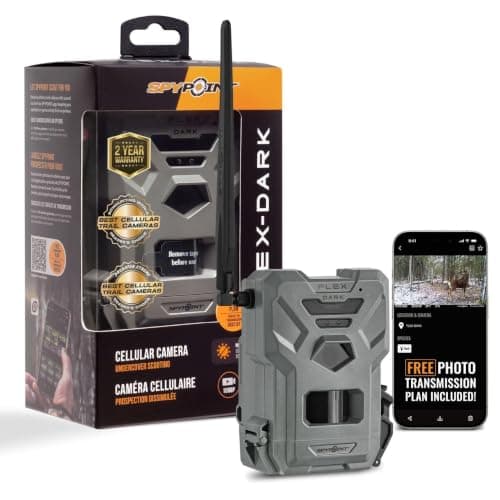
Spypoint Flex-Dark
Spypoint8.4/10Spypoint lists time-lapse and scheduling in the app, plus no-glow LEDs and a free 100-photo tier, so the motion half of a hybrid set costs nothing to receive.
$100.04Amazon#ad · Price as of October 12, 2026 · Disclosure for the link to Spypoint Flex-Dark
Best trail camera for video
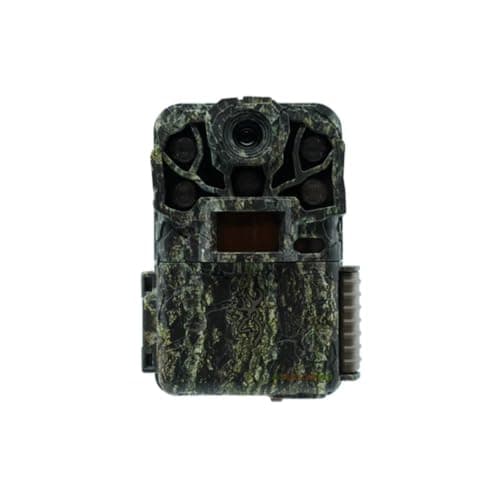
Browning Recon Force Elite HP5 Ultra
SD / Wi-Fi8.7/10A 12-volt external power jack, a 2-inch screen for framing the plot, and 1440p video at up to 60 fps. Power is what a time-lapse set needs most.
$153.36Amazon#ad · Price as of October 12, 2026 · Disclosure for the link to Browning Recon Force Elite HP5 Ultra
Best budget 4K camera
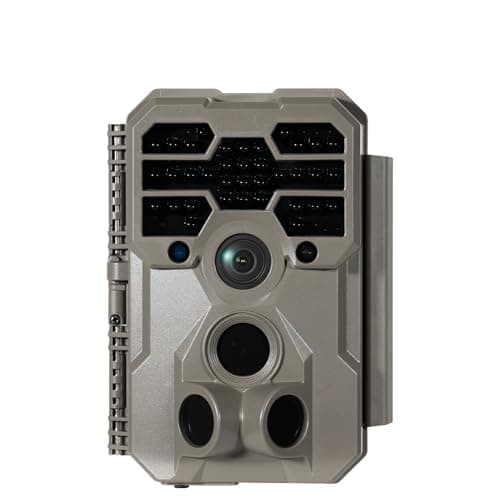
GardePro A60 4K
SD / Wi-Fi7.8/10A claimed 120-degree PIR span, a 2.4-inch screen and a 12V input with solar compatibility: a wide, cheap, externally powered frame.
$109.99Amazon#ad · Price as of October 12, 2026 · Disclosure for the link to GardePro A60 4K
Reviewing a time lapse without losing a day
A plot camera produces thousands of nearly identical frames, and scrolling them one at a time is how people decide time lapse is not worth it. Two habits fix that. Review on a handheld viewer or a tablet where you can swipe quickly rather than clicking, which is what the card readers in best trail camera viewers are for. And load the folder into any viewer that plays an image sequence as a slideshow at a few frames a second; a day of plot activity then takes thirty seconds to watch, and movement jumps out of the sequence in a way it never does frame by frame.
If you want the sequence tagged and searchable rather than just watched, the software options are compared in best trail camera software.
How we scored this
The research behind these picks
Every pick here is built from documented evidence: the maker's published trigger speed, flash type, battery configuration and detection range; each brand's plan tiers verified on its own plan page and turned into the real monthly cost at one and four cameras; the independent shootouts (Trailcampro, Outdoor Life, Field & Stream, TechGearLab) cited by name for the measurements they published; and a public rubric applied the same way to every model. Every figure links to where it came from, so you can check our work in one click.
Scores are editorial judgments from that documented research. Commissions never set a score or decide a pick. The rubric and its weights are published.
Questions
Frequently asked
What is time lapse mode on a trail camera?
A mode in which the camera takes a photo on a fixed clock interval instead of waiting for the motion sensor. It photographs the whole field of view rather than only the narrow detection fan, which is how one camera can cover a hundred-yard food plot.
What interval should I set for trail camera time lapse?
Five minutes, bracketed to the first and last two hours of daylight, is the standard setting for a food plot: about 48 frames a day, enough to map entry points without flattening the batteries. Use ten minutes for all-day field coverage and one frame a day for crop growth records.
Does time lapse drain trail camera batteries?
Yes, far faster than motion detection, because every interval is a full wake-and-write cycle whether or not anything is there. A one-minute interval over a twelve-hour day is 720 frames. Run time lapse on external power, or on a short deployment.
Is hybrid mode better than time lapse?
For most people, yes. Hybrid runs the clock and the motion sensor together, so you get wide census frames and close triggered photos from one camera. It is also the most battery-hungry mode on any camera, so pair it with a 12V supply or a panel.
Does trail camera time lapse work at night?
Not usefully. Almost no camera fires its flash for a time-lapse frame, and one that did would empty its batteries in days and advertise its position all night. Set the time-lapse window to daylight and let the motion sensor cover the dark.
Keep reading
Related on Cam & Canopy
- Trail camera settingsEvery mode and delay, with the reasoning.
- Trail camera placementWhere a wide frame earns its keep.
- Detection range explainedWhy the detection fan is narrower than the frame.
- 12V battery boxesWhat a time-lapse set should be running on.
- Best trail cameras for battery lifeThe measured runtimes a time lapse spends.
- Best trail camera softwareReviewing thousands of frames without losing a day.
Receipts
Sources
- Trailcampro — GardePro T5NG Pro review, measured figures, score and stock (checked 2026-09-28)
- Trailcampro — GardePro T5NG review, measured figures (checked 2026-09-21)
- Spypoint — FLEX-DARK product page (checked 2026-09-21)
- Spypoint — photo transmission plans (checked 2026-09-21)
- Browning Trail Cameras — Recon Force Elite HP5 Ultra product page (checked 2026-09-26)
- GardePro — A60 4K product page (checked 2026-09-21)
- SanDisk — Extreme PRO SDHC/SDXC UHS-I product page (checked 2026-09-21)
Every number above is traceable: specs come from the maker's own product pages (linked on every product), plan prices from the maker's plan page with an “as of” date, and independent measurements are attributed to whoever made them. Amazon prices change often, so every buy button takes you to Amazon's current price for that listing. Read the full method.